Wednesday, January 30, 2019

A Doctor's Prayer

I have been up almost all night. A woman came to us two days ago from a remote community with a severe post partum hemorrhage (bleeding after birth). We did emergency surgery to remove her uterus, but she was extremely ill as she she'd lost basically her entire blood volume and lost the ability to form blood clots. The whole hospital banded around her, with many physicians and nurses donating blood for her. While at first it was touch-and-go, the next day she really started to improve. She was alert, cuddling her baby, and joking with her nurses. We decided to remove some abdominal packing that we had left in her abdomen as she was doing so well. Unfortunately a few hours later she suddenly and unexpectedly declined and died. This poem is dedicated to her.

God, forgive me
For my pride and arrogance,
Thinking that I alone held the power of life over death
Visualizing selfishly the gratitude the patient and her family would bestow on me as I had snatched her from Death’s grip back into Life.
You, alone, hold the power over life and death.
My skills are not mine to hoard smugly in silent superiority,
But are merely an instrument to glorify You.

God, hold me
In my grief,
That I could not do enough,
As I had to sit by and helplessly watch her slip away before my eyes.
The agony of powerlessness like a tsunami engulfing me, 
silencing my inner screams of despair
My body spasming in grief 
As I watched her mother screaming and tearing at her hair in anguish,
Fists slamming into the walls
As she melted into a motionless puddle of moaning grief on the floor
While we stared on wordlessly, helplessly
The day's events and decisions on endless repeat in my mind
Torturing me with “what if”s.

God, comfort me
Trusting in You always
Though I do not understand Your ways.
Gather me up like a child in Your loving arms
And tell me that everything is going to be ok.
Kiss away my tears and make them holy,
Silent prayers to you
More honest than any words could ever be.

God, grant me courage,
That I may continue Your work of healing here on earth
And providing comfort and reassurance to others when I cannot.
Let me be Your hands and feet.
Spare me, Lord,  from becoming too hardened to the pain,
Too jaded with cynicism
Too self-protective to engage in the hard work of loving Your people.

God, restore me.
Lead me back to your green pastures
Of refreshment and renewal
That I may always be reminded of Your love and mercy
So that your love for me overflows 
Into a fountain of grace poured out on all those that I meet
That they may also know You, Your love, and Your everlasting peace. 

Amen. 

Wednesday, January 23, 2019

Untitled

“The art of medicine is to cure sometimes, to relieve often, to comfort always.”
 Ambroise Paré, physician to King François I

“Merci”, she says, in a whisper so low I can barely hear her. She extends her hand to me in thanks. I take her hand in mine and shake it gently. Her eyes stare at the ground the whole time. I can feel pricking at the backs of my eyes as tears threaten to spill over. “Don’t cry, don’t cry” I chant to myself in my head. 

How can she be thanking me? I have just told her she had incurable cancer. She had moaned and cried out in pain when I examined her. The cancer on her cervix was so friable that my exam caused her to bleed all over her pagne, her bright yellow cotton wrap she used as a skirt. In modesty, she hadn’t wanted to take it off when she slowly made her way up to the examining table, her sixty hard years of living and labouring showing in the slow and painful way she moves about the room. And now it was stained bright red with her shame and sickness. We had tried in vain to try to tie it in a way that preserved her dignity but alas, we could not. This is the only time during our whole encounter that she seemed distressed. As the translator told her the news, she hadn’t flinched. I had tried to reassure her that we would try everything we could to manage her symptoms, knowing full well that there's not much I can do. She had wanted something to stop her bleeding. There was nothing I could offer her; so I gave her some stool softeners and Tylenol instead.  Such paltry tools in the face of the suffering I know that her cervical cancer will bring her. When I ask if she or her son has any questions, she quietly shakes her head. 

When I offer her the chance to talk with one of our counsellors to further discuss her diagnosis and her thoughts and fears about the times ahead, she accepts. However when the counsellor arrives, he, the woman’s son, and my translator launch into an animated conversation. I don’t know what they are saying but I can tell the counsellor and son are getting agitated. My patient sits motionless in the corner, eyes downcast, as they discuss her. Her hands are neatly folded in her lap, covering the blood stain on her pagne.

“Her son doesn’t want his mother to know she is sick,” my translator Mohamed finally informs me. 

“But, didn’t we just explain it to her?” I ask the Mohamed. He’d translated everything I had just said. Mohamed doesn’t answer, he just spreads his hands wide in an appeasing gesture. 

“They just want to go home,” he says simply. 

“What does she want?” I insist. For my patient, not her son, had been the one to express interest in meeting the counsellor. 

“We can’t force them,” is the answer I receive. I’ve noticed here that the translators (almost all men) rarely talk to the women if their husbands are present. They only talk to or look at the husbands, sons, or whichever male relative the patient has brought with her. I am frustrated but I don’t know what to do. I don’t want to impose my cultural values on them. But I also want my patient to have the right to seek the counselling she sought. 

Before I can think of what I should do, the son speaks to his mother, and she rises to leave the room, hands still strategically trying in vain to cover her soiled pagne. I feel sick. I have just told a patient she has terminal cancer. All I’ve done is give her some Tylenol and stool softener; not even a follow up appointment, for it would cost them extra money they probably don’t have, and there is really not much else we can do for her. Due to language and cultural barriers, I have no idea what’s she really thinking, and feeling, or how I can help her. My hope of providing her reassurance through the counsellor is lost. I feel I’ve done nothing for her. Perhaps worse than nothing. And yet she thanks me. She extends her hand to me in respect and thanks. I can barely take it. I will her to understand how much I feel for her, how much I will be praying for her in the weeks and months ahead, how I wish I could do more for her. But before I know it she is gone. And I am left trying to hold the tears back. 

Interrupting my reverie is a knock on the open door I’d forgotten to close.

“When is my wife being seen?” a man demands. “We have been waiting all morning.” I squeeze my eyes shut, swallow my grief, and grab the next chart. I will myself to file my patient away in the back of my mind, somewhere she won’t intrude, so that I can focus on the next woman. But when I come home, I can’t stop thinking about her. I wonder how she is doing, what she is thinking, who she is with tonight. And I cry.

Friday, January 18, 2019

Musings on Missionaries

As I walked toward the maternity ward, I could see a small crowd gathered around a bed in the (one-bed) ICU. Looking up briefly at the patient’s monitor showing his vital signs, I could see that things were not looking good. His family was gathered solemnly around the bedside, all eyes trained on their loved one. I saw one of the hospital physicians, crouched by the bed, her head bowed and her forehead almost touching the patient. One hand was on the patient’s shoulders, the other gently on his head. Some family members had their hands placed on the physician’s back or on their loved one. I couldn’t hear what was being said, although I could tell it was a prayer. It was beautiful to witness. 

I feel so many times in our system at home, in our efforts to maintain boundaries and professionalism, our overloaded schedules, patients can somehow just become a medical problem to puzzle over, an abstraction devoid of humanity, one more task to deal with before moving on to the next. In our culture, we’re often afraid to ask people the spiritual and existential questions that can matter the most. Even though we might be the one who knows the patient best, when these questions come up, we’re often quick to just call in a chaplain or social worker so that we don’t have to deal with these uncomfortable situations that we feel unequipped to handle. It is beautiful to me that in this scenario, the doctor was able to not only tend to the patient’s physical ailments, but his and his family’s spiritual and emotional needs as well. For those who believe in God, an earnest, heartfelt prayer by someone who knows you and is caring for you can be the most meaningful and beautiful thing someone can do. And as a physician, it is very satisfying to be able to help with healing on more than just the physical level, as often the existential suffering and pain associated with illness can eclipse physical suffering.

If you ask anyone from a non-Christian background what they think of when they hear the word “missionary”, the image that often comes to mind is of an older man in Jesuit clothing traveling to far off lands, converting the indigenous inhabitants to Christianity in times past, and perhaps the destruction of cultural artifacts and customs. To many non-Christians today, the word "missionary" may not have the most positive connotation. I can’t speak to how things were in the past, or how they are in other parts of the world. But I can speak to what I witness, and so far from my observations, this negative reputation is undeserved. (*Disclaimer: I’ve only been here a week, so I still have a lot to learn and there’s tons I don’t know.)

The “long termers, ” as we call them, are men and women who have chosen to live their lives in Togo. They live for 3 years in Togo, then take 1 year off to go back home to raise money and support for their next 3 years (as far as I understand they have to fundraise their entire salary). That it itself is a formidable task (at least for someone like me who hates asking for money), but those who choose this path-less-travelled have many other challenges. 

Many missionaries who come had no prior knowledge of French (Togo’s official language), so they’re given anywhere from a  few months to 1.5 years of French boot camp in France prior to arrival. Even though French is the official language and everyone is taught it in school, many people in this and other rural areas didn’t necessarily attend school and learn French (female literacy rate in Togo is only 55%). Togo also has a ton of local languages (44 to be exact!), as there are over 40 ethnic groups in this small but densely populated country of 6 million. In addition to struggling with French, few of the missionaries here speak much of any of the local languages, (I think there are at least 11 in this area alone), which makes integrating into the local community difficult. 

Here is a random picture from my drive up from Lome to Mango; the transport truck was off the road so we had to go around.


Amazingly, some of the missionaries have learned to speak Anafo or other local languages despite there being no formal learning resources. I met someone with a linguistic background who is working on translating the Bible into a remote local language; she is having to learn the language, develop an alphabet, and then translate the Bible (sounds like at least one lifetime of work to me!). She lives in this remote community with her family (but no other foreigners), where no one would speak English and I would doubt that even French would be widely spoken. 

In terms of “saving” (or “converting” people, depending on your point of view), I’m not sure exactly how it works here, as I’m here in primarily a medical capacity. I know a lot of people get squeamish when it comes to aggressive evangelism that is forced rather than inviting. From my understanding, many of the missionaries are here to serve the people of Togo through the hospital, and to develop relationships with the locals in the community in which they are working. They just do life with them. I’ve had missionaries come to the hospital with their ill Togolese friends to be with them, feed them, take care of them (nurses here are strictly responsible for medical care, no food or hygiene services provided). They celebrate important festivals, like breaking the fast during Ramadan, with them (this is a predominantly Muslim area). They do share their faith openly, as it has been such a positive force in their lives (which I can relate to, as it has been such a transformational, crucial and fundamental part of my life) and invite others to explore it for themselves. I get it, as it has been such an amazing part of my life, I want others to at least know about it, so they can choose for themselves whether they want to explore it further. It’s like finding the best study resource for an upcoming exam; you’d be selfish to keep it to yourself. For patients who wish to, physicians will pray with patients and their families, which I think is a beautiful thing, to support them spiritually as well as just physically. 

Life up here in Mango isn’t always easy, especially for those who live “off compound” (more about the hospital compound later). They’re a 9 hour drive from the nearest big city (Lome, the capital) where you can get things everyday conveniences we take for granted, like cheese, chocolate, coffee, or good shampoo. I haven’t had any fresh fruit since I arrived here since none is in season and they don’t import any in Mango. 

Small everyday things we take for granted are so much more difficult here; imagine learning to cook with minimal available ingredients, having to wait for a shipping container that might come once a year for any new furniture you want, not being able to drink tap water and not having easy access to bottled water, running out of water and electricity regularly (which also means your fan and fridge stop working), and not being able to see family or friends for 3 years at a time. To forgo the comforts of home, often choosing a life of relative poverty by our standards (although by Togolese standards they are wealthy) and material hardship. Forever. Many have come here having only done a brief visit; some have minimal overseas experience. They truly live here, from having their children here in the hospital, to schooling their children on the compound. I’ve spoken to lots of “long-termers” and when I ask them what they love most about their job, the answer is almost universally and unequivocally “the Togolese people”. To me, actions speak louder than words, and these people are really showing love for the people of Togo by forgoing their own creature comforts they’re accustomed to in order to live life in solidarity with the Togolese. 

One story in particular stood out to me: there was an American surgeon who helped start the hospital (it’s only a few years old); he lived here with his wife and children. Two years ago, he became very ill with Lassa Fever** (a less dangerous cousin of Ebola; see below for details) and died despite being evacuated to Germany. His wife, instead of picking up and leaving back to the USA, has continued to stay here in Togo with her children and continue her work here. Her parents have moved here to help on the hospital compound so they could better support their daughter. This is dedication. This is love for the Togolese. This has so far been representative of my experience with missionaries.

Despite the fact that missionaries living in the community are living in hardship compared to North American standards, life on “the compound” (which is where I am) is pretty deluxe. By Togolese standards, it’s 5 stars. “The compound” is the large piece of land (63 acres) that houses the hospital. It also has the guesthouse, where “short-termers” (like me) live, and the permanent houses of a few long term missionaries (primarily MDs who have to be on call frequently). We are really spoiled. There is POTABLE WATER coming out of the taps!!!! (This still blows my mind.) They have a generator so we don’t have to suffer through the frequent power outages and resultant surges that fry pretty much any electronic device. There is a beautiful pool that was donated by two competing Texan pool companies who came together to donate the materials and expertise to build the pool. I have 3 (mostly American-style) meals a day prepared for me and the dishes are done by the kitchen staff. In my room I have a ceiling and wall fan, AC (extra cost) and hot water (not that I need it, it’s boiling hot!).

Typical view of "the compound". It is very dry and dusty here! (And also hot. Very, very hot.)

On the right are solar panels that help power the compound when the  power goes out. There is also a back-up generator.

Here is a view of the hospital. It has an inpatient and outpatient building. The cement blocks were all made locally.

My room! (Notice there are no blankets...I rarely even sleep with the sheet over me. Too hot! I keep the curtains closed to avoid scandalizing any passing Togolese while I lounge in my tank top and short-shorts.

Luxury bathroom!

The pool (and outdoor gym you can see at the far end)
The kiddie pool is attached; there are also fountains


My goal in coming to the Hospital of Hope was primarily to serve a medical need. I decided to sign up with Samaritan’s Purse (a Christian charity which has many overseas partners) because of their good reputation among development workers (well, at least the few that I know and talked to!), plus I am Christian. I am all too aware of the potential ethical pitfalls of short term medical “voluntourism” as it’s often called.  So I wanted to go somewhere where I felt that I would be helpful and the system sustainable even though my visit would be short (about 5 weeks).  In the end, I just told Samaritan's Purse to just put me where they felt I was needed. So here I am! 

Here at the Hospital of Hope, I’ve since learned that the OB/GYN who was here for the last 1.5 years is actually leaving 2 days after I arrive. I have mixed feelings, as I would have been much more comfortable coming as her locum, which is what I’d initially thought. However, when I talked with her about it, she reassured me she has tried to help the locally trained midwives and an expat family MD with an interest in OB (Stephen) to take over after I leave. 

Many of the long term missionaries have told me that having the “short-termers” coming over has been a refreshment and encouragement (I am taking over a bunch of the CS call to give the sole local general surgeon a bit of a break). I’ve talked to Stephen, and he’s keen to improve some of his OB skills (he already does C-sections and vacuum deliveries) so hopefully in the short time I’m here, I’ll be able to help mentor him through some things he wants to learn (ex. D+C). I’m going to try to put together a teaching session for the Togolese nurses and midwives on a topic of their choosing. In the meantime, I’m able to provide some more continuity to patients for at least another month (for whatever that’s worth.) And I’m glad in a way that the other OB isn’t here, as surprisingly there seems to be enough work for only one. 


**A few words on Lassa: I didn’t think I was going to be here in Lassa season (which normally runs from Feb-April) but apparently there’s already been a confirmed case an hour south of here and suspected case has been admitted to the hospital. Lassa has been known to be around in West Africa for years, but only recently discovered in Togo (ironically, the first case here was the surgeon who passed away 2 years ago). Chances of death are pretty low, at only 1%, however risk of deafness is about 1:3 (yikes!!). Thankfully it is less contagious than Ebola and not spread by casual contact.
The "Lassa Tree", where patients with fever are being evaluated by a physician to assess their risk of having Lassa Fever. If they meet criteria, they are admitted to a special ward and confirmatory testing is sent to Lome.


I’m impressed with the hospital’s response to Lassa: they have developed their own Lassa risk factor algorithm and screening tool and have a very systematic way of dealing with and minimizing the risk. Once Lassa season starts, every patient wishing to be seen at the hospital has their temperature taken at the gate before they enter the compound, and if they’re febrile, they’re put under the “Lassa Tree” to be further evaluated by a physician. If they are suspected to have Lassa, they are admitted and isolated in a special “Lassa Ward” so as to minimize exposure to other patients and staff, even though Lassa isn’t terribly contagious. There is currently one patient in the Lassa ward, but confirmatory tests are pending.

Friday, January 11, 2019

It's Togo Time!

How in the world am I going to fit this much luggage into just 3 suitcases?! This was my second thought after seeing how many donations the amazing L+D nurses at the Foothills Hospital had gathered for my upcoming trip to Togo (West Africa.)  (My first thought was "this is amazing!") I was initially told to expect just one small box, but somehow like the parable of Jesus and the fish and bread, the donations seemed to have mysteriously multiplied. I was also a bit concerned as to how to get all of these down to my vehicle in a parkade at the far end of the gigantic FMC complex.
FMC L+D team! I am in pink and Kham, in purple to my right, was the donation mastermind extraordinaire!

However, if you have any nurses in your life, you know they are resourceful and smart.


So they suggested I go get my car and park in the loading zone while they loaded the bags onto a few carts and brought them down to me. Good thing I had my parents' SUV or I might not have had trunk space!


Back at home, in my usual last minute fashion, I was in a scramble to pack the night before I left. In the end, I couldn't fit everything into 3 suitcases, but managed to do it in 3 suitcases and a box. Even that was a stretch; I needed to sit/stand/jump on the suitcases to get all the air out so I could cram all those cute little baby hats and blankets in!
Here is me feeling heroic while my dad does the real work of trying to close the suitcase.

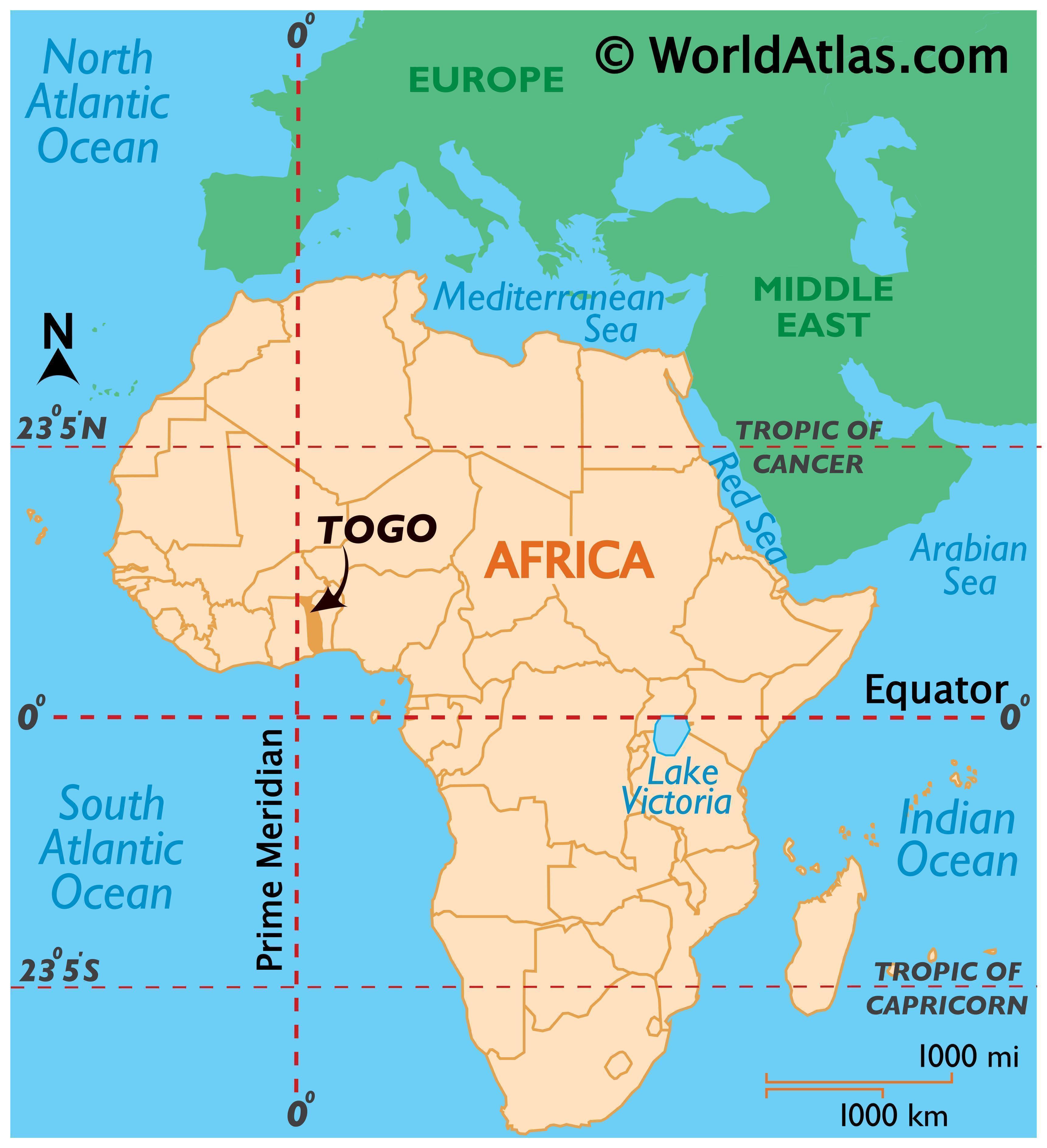
To back up a bit, for those unaware, I am heading off to Togo to volunteer with Samaritan's Purse for about 5 weeks. I'll be in the town of Mango (I am hoping it is named that for a reason! My favourite tropical fruit!) Mango is in northern Togo, which is in West Africa.

Image result for togo mapI'll be filling in for the local OB/GYN while she is away. As a medical student I did an exchange to Rwanda, and as a resident I went to Uganda, but this will be my first time working overseas as "real doctor". I'm not exactly sure what to expect.

The Hospital of Hope (https://hohmango.org)is a permanent 65 bed facility open since 2015; it serves primarily local Togolese, but apparently people come from as far away as parts of Burkina Faso, Benin, Nigeria, and Niger. There are 140 Togolese staff and 40 expats who work there. The expats are a mix of long term career missionaries and shorter term volunteers.

Little did I know, my volunteering would be starting a bit earlier than anticipated...on the flight from Paris to Lome (Togo's capital), sure enough there was an overhead call for a doctor on board to identify themselves. I was pretty exhausted as I'd already been travelling for over 24 hours by this point, and as an OB/GYN, unless someone is having a baby, I feel like my skills are pretty limited. So I waited a few minutes then grabbed the flight attendant as she went by, but unfortunately (or fortunately, as I later decided!) no one else had volunteered yet. 

Luckily it was a pretty straightforward case; someone with a mild allergic reaction that just needed some anti-histamines. However, in true French fashion, the bureaucracy required for them to open the medical kit for me was impressive; I had to show them a copy of my Canadian medical license (which I never travel with normally, I only had it because I'm doing medical work in Togo). But we don't really get nice laminated copies of our medical licenses anymore, so I just had a printout of a pdf. 

Well! Didn't that cause a rigamarole! I was glad this patient wasn't having a heart attack because it took about 20 minutes for them to get approval from the captain, discuss among themselves, take a copy, etc. etc. etc. to determine that yes, perhaps I am actually a doctor and should be allowed to help this woman! (Who would carry around a fake medical license?!) 

Unlike the last time I was asked to provide medical assistance on an overseas flight which was pretty anxiety-inducing for me (decreased level of consciousness in an old man; I kept checking on him every half hour or so to make sure he was still alive and I was stressed the entire flight), this was easy, and, also unlike the last flight, I got a nice little treat for helping out! (Yay Air France! Boo Air Canada!) Yup, you guessed it, I got to ride the rest of the way in business class! Meal designed by a 3 star Michelin chef? Yes please! 


Business class flight for giving someone an antihistamine tablet? Sounds good to me!


Stay tuned for my trip up to Mango and my first impressions of life here. I'll try to keep up to date if I can. And please feel free to add comments or email me a hello!

Thursday, December 19, 2013

Night at Mulago


My last entry, for this trip at least. I’ve had this one written for a while, but debating on the details and how to portray it. I’ve had some adventures in between, which are unfortunately a bit too complicated (and inflammatory!) to get into here, but please feel free to ask me and I will happily tell you the whole long, convoluted, and unfortunately very sad and frustrating story.

But before I sign off, for this trip, at least, here is one last short snapper of my last clinical experience here in Uganda. I spent one night of obstetrics call at Mulago, the national referral hospital and center for the nation’s biggest medical school, located in Kampala, Uganda’s capital city. It provides free, quality care to patients from across the country, who flock here for its free and specialized care.

More than a narrative experience, the night came to me in a series of sensory snapshots. I will try to capture some of them here. The images come in flashes, not a sensory coherent whole. There are no photos, as I did not have my camera, plus I’m not comfortable with the ethics of taking pictures of hospital wards filled with people. You will just have to use your imaginations!

*          *          *

Slop! It sounds and looks like someone has poured half a can of red paint over the floor beside one of the labour beds. Except instead of red paint, it is the lifeblood of a woman who has just given birth. Standing beside her bed, the gush comes suddenly and unexpectedly, making a bright splash on the greyish yellow floor. A spot of bright colour in this drab ward, atypical for Ugandan hospitals, normally characterized by the cheerful prints of various blankets, sheets, and nightgowns that patients bring with them to the hospital.

Another, slightly higher pitched slop  draws my attention, followed by a prolonged retch and more slops. A woman who has yet to receive a bed is kneeling quietly over a small green bucket, vomiting in the middle of the hall, for all to see. But I feel like none do, so wrapped up is everyone in their own world, the laboring mothers agonizing at their own bodies’ uncontrollable spasms, the midwives and doctors flitting like hummingbirds purposefully from one patient to the next.

One bed over is a twin bucket, this one cheerfully yellow. A pregnant woman sits on it, eyes squeezed shut, mouth a tight line. She is straining hard. I have no idea whether she is trying to push out a baby or a bowel movement.

*          *          *
Women here tend to shun clothing in labour, their dark bodies, gleaming with sweat, contrasting with the bland faded paint that coats the walls and floors.  They rock rhythmically to understated groans of pain, punctuacted by occasionally sudden stiffenings accompanied by bloodcurdling screams, throwing all those around into reminder of just where we are. A strange sight it is, all of them at once, up to 20 at a time. Beds so near to each other, with no curtains or privacy between. Yet each woman is involved in her own world, her own struggle to push forth new life into this world.

I’m sad that the mothers must be alone. Because of the already crowded chaos that seems to typify Mulago for me, women are not allowed anyone to accompany them into the labour ward. So they sit and lie and crawl and stand and kneel in pain, alone, some curled up quietly gently rocking or waving a hand to soothe themselves, while others keen and wail and scream out their fear and agony. The midwives and doctors are spread thin, so only the loudest, most desperate of screams “MUSAVO!!!!” (“doctor/nurse”) seems to garner attention. I sit there, often paralysed by my inability to communicate with most of these women. I am there, awkwardly at the doctors’ bench, watching women laboring in front of me, sitting patiently on the ground, waiting for a bed, or crawling up in utter agony to the bench in hopes of being told where to go and what to do. I review their charts, and tell them to wait until a bed is available. I wish I could help more.

*          *          *

A woman comes up to me, cramping lightly. “Please doctor, I want a cesarean”, she says. “What is your reason?” I ask, as I start to thumb through her chart. “With my first baby, I laboured so many hours, then had a cesarean, but she died anyway. I have no children. Please, I don’t want this one to die, too!” I can see tears in her eyes. I agree. But when will we schedule her in? Even though we have 2 C/S ORs running all night, we still have a back up of emergencies here on L+D that must go first---the laboring woman who’s had 3 previous scars and has been laboring for hours, the woman who is bleeding briskly and we’re concerned not only about her baby, but herself for going into DIC (severe bleeding that can easily be fatal), for the other woman whose labour is obstructed with signs of serious fetal distress. How do we choose who goes next? She sits patiently among the madness and waits.

*          *          *

I wander to the pre-eclampsia ward. We go through 3 blood pressure cuffs before we find one that works. The beds here have even less space between them than on labour and delivery (“L+D”)—not even an arm’s length from one bed to the next. The women who aren’t fortunate enough to have a bed are seated on the floor, on a thin bamboo mat or cloth they’ve brought from home.  These are long-term patients, confined to a small space on the floor with minimal padding for days or weeks on end. There are also two laboring women here—both are inductions; one who due to her severe pre-eclampsia, the other because her baby died inside and it needs to come out. The woman with the dead baby just lies on the side of her bed, eyes and mind blankly staring somewhere else. She absently strokes her stomach tenderly. The woman with the live baby is writhing in pain and screaming loudly, back arching in agony. When I asked if perhaps it was time for her to go to L+D, I was informed that the pre-eclamptics have to labour in the pre-eclampsia ward to keep a closer eye on them. Hard to believe that there is less privacy here than L+D, but there is. Not only are the beds practically touching, but no one else has any distraction other than her, and it is not a self-contained or closed ward—anyone walking by to the bathroom from any of the other wards or just wandering the halls, will definitely hear and probably also see her bare dark body spasm in agony.

*          *          *

Mulago is an overload for the senses. Visual, auditory, olfactory. First of all is the ever-present scent of body-odour. Many Africans don’t wear deodorant. However, that is the least of my concern as I walk by certain other areas, where there is an overwhelmingly foul odour so potent I have to make a conscious effort not to retch as I walk by. My efforts to keep my face neutral fails as I wrinkle my nose in protest. The source of the offending odour? There is only one functioning bathroom for all the antenatal and post-natal mothers and attendants—about 100 mothers in all.  I haven’t had the courage to see if there is a sink and soap or alcohol to wash hands. I really hope so, but given the paucity of sinks and places to clean your hands in general, I’m not so sure.

Ironically the woman with the closest bed to the bathroom (even if you didn’t know it by sight , you would definitely know by smell) has an open infected wound growing ultra-resistant bacteria to everything except meropenem, one of the most expensive antibiotics. She certainly can’t afford it. I wonder what will happen to her. Her next door bedmate has active TB and is coughing everywhere. She is so skinny, between her HIV and TB, she is literally wasting away in front of me, her upper arms skinnier than my wrist. There are also plenty of women with malaria in pregnancy. Fortunately, easily to test for and treat. Not so fortunate: there are no mosquito nets and lots of mosquitos flying around spreading the disease from patient to patient (yes, even in the OR, I had to bat a few mozzies and flies away).

*          *          *

Getting to the C-section OR involves walking through a small foyer. I literally have to pick my way through a maze of people who have basically set up camp in the corridors. I’m not exactly sure who these people are, whether they are family members and friends of the women in labour, women waiting to be assessed/placed, or the post-partum mothers who aren’t keen on staying in their “room”. Not that I can blame them if they’re the latter. Women who’ve had a normal vaginal delivery are crammed together like cattle into a small, windowless room with no furniture (there is no room.) The floor is mostly covered in mats, cloths, and bamboo mats. The women sit crammed, side by side by side, cross legged (there’s no room to stretch out), holding their babies. It is literally just a holding area for post-partum mothers.

*          *          *
Like everything else at Mulago, the OR is a bit of a culture shock. Once I successfully weave through the masses of bodies to get here, I am given a dirty looking (but I’m assuming sterilized/clean?) large piece of square cloth to tie back my hair. There are 2 residents on tonight plus an intern just dedicating to doing Cesareans. Two rooms are going at once, non-stop. I figured out from first glance that these were not originally designed to be ORs. More than anything they remind me of a concrete one-car garage. The ORs are not closed off, even from each other; from the OR hallway, you can look into all 3 ORs at once. Set up is basic: anesthetic machine, OR light, instrument tray, which had a variety of instruments, sometimes what you needed and sometimes not. Even very basic, essential instruments, like needle drivers (used to hold the sutures that sew people together) aren’t guaranteed-for one case I have to use a hemostat instead. They have run out of catheters, making surgery more difficult and dangerous as we try to avoid the bladders that puff up like balloons. There are no mattresses on the stretchers, and neither the OR beds nor stretchers change height, so transferring patients always involves a rather uncomfortable yank-and-plunk (about 30-40cm down) onto the metal stretcher.

There is no particular waiting area for patients waiting for C-section. When their turn is coming, up, women are shown the door to the OR. They then sit on the floor in the corner, clutching their papers and their sarong, laboring, cramping, crying, until the room is ready and they can find a bed to crawl on. I feel sorry for them, if I am a bit confused and intimidated and overwhelmed, how much more their fear and anxiety!  But once again, my very limited Luganda prevents me from comforting them and explaining the situation.

*          *          *

Somehow the night passes by and it is time for morning rounds. Good thing it isn’t just me rounding, or I would miss chunks of patients. I didn’t realize that at Mulago you don’t just look for full beds and people on the floor, but there are also frequently patients under the beds!! Probably so that they don’t get stepped on by being between beds.
*          *          *

And thus was my night at Mulago. One one hand, enough to bring me to my knees in tears at the state of the national referral hospital, the country’s largest teaching center. Lacking basic necessities such as water, toilets, beds, it can be overwhelming. Yet, despite the chaos, I continue to be awed and amazed by the staff who work there. They are uniformly committed to their jobs and to their patients, whatever the work environment and terrible wages. Their knowledge and skills are certainly up to any resident or doctor I know back home, and more advanced in areas that we rarely see at home, such as management of multiple co-infections, such as TB, HIV, and malaria. After just one night, I’m not sure I could survive, let alone thrive in the chaos and madness that is Mulago. Yet the residents and doctors and midwives and nurses here do. I definitely have a thing or two to learn from them. And next time I’m back at home complaining about something like the difficulty of getting after-hours ultrasounds, or that lab results are taking a while to show up on the computer, I’ll think again, recalling the patience and cheerfulness of my colleagues in Uganda and other parts of the world who work in infinitely more difficult circumstances, and remind myself how fortunate I truly am to live and work in Canada.


Friday, December 13, 2013

The Mighty Nile and the Mystery of Hotel "Jekyll and Hyde"


Everyone who has been to Uganda told me to go to Jinja and go whitewater rafting. I was a little anxious about whitewater rafting, for while I had a most excellent and enjoyable experience with my sister rafting down the Colorado River in the Grand Canyon this spring for 2 weeks, my last experience rafting overseas was in Thailand years ago, and during one particularly scary capsize, I became doubtful for my ability to come through alive. (Those of you who’ve been on this email list long enough will remember that entry!!)

I later found out from one of the American guides (though most were Ugandan) that of the 20 rivers he’s rafted on, the Nile (this stretch) is the safest because it’s so large volume there’s little chance of smashing yourself against a rock, and the rapids are short followed by long stretches of flat water. I did learn, however, that while it is generally crocodile-free since the villagers kill any spare crocs, there was a 15 footer that was captured and killed a few months ago here. Yikes! Maybe this is the reason I had that song “Never Smile at a Crocodile” inexplicably stuck in my head most of the way down…

Luckily for us, no crocs on this trip. Lots of capsizing, though! Out of 8 rapids, we flipped on 4, and I fell out on an additional one. At first it was terrifying, being washing-machined around in the spinning water, bumping up against the raft, being sucked back under, and, luckily for me, the second time popping up was never back under the raft. But by the end, flipping was almost blasé, (but not quite). I was pretty much expecting it. Especially when you see a huge standing wave that is twice as high as your boat, with lapping foam coming down  generously over the crest, just begging to flip you over (which it inevitably did.) Luckily the water was 28C, as was the air, so it was just a refreshing little swim to get capsized. Sometimes in the flats we would just jump out and swim for the heck of it.

Jinja is located at the source of the White Nile, as it leaves Lake Victoria. I found what at first seemed to be a too-good-to-be-true budget hotel, right on Lake Victoria at the Nile Headwaters! How awesome is that?! Really awesome. The views were incredible, in the morning mist, watching the sun set, just so gorgeous and peaceful. A kind and gentle Dr Jekyll. Except at night. Night was an entirely other entity here at the Hotel Triangle. It’s when it’s evil Mr Hyde side came out. It’s when the lake flies came out. They are kind of like mayflies back home-big, but harmless. At least, that’s what I had to keep telling myself, as I tried not to panic walking back that first night after supper (in the dark) walking along the outdoor balcony to my place, the crunch crunch crunch over hundreds of lakefly bodies, the walls looked black and alive and swarming rather than the painted white I knew them to be. I swatted at my face as they kept entangling themselves in my hair and flying into my eyes, nose, and mouth.

See how beautiful the headwaters of the Nile are in daytime! 
Still glorious at sunset! Little did I expect what was coming!

No I did not get any night photos. Sorry. The less time being mauled by bugs the better. Plus there was NO WAY I was getting out from under that mosquito net, no matter how tempting the photo....you'll just have to imagine.

I stepped into my room, turned on the light, and closed the door, relieved to be out of the madness. WRONG ORDER. In the microseconds between turning on the light and then shutting the door, I’d been invaded. Hundreds, if not thousands, of flies were now in my room. I was starting to get demoralized. I quickly let down my mosquito net, but to little avail, for there were almost as many bugs inside the net as out. I put the net down anyhow and went on about a 20 minute killing spree making my white sheets black with polka-dotted black bug bodies. I then covered the sheet tightly over me to prevent me from feeling any more creepy-crawlies (which worked except when they crawled on my face, or up from under the sheets).

I think I might have fallen asleep, but woke up in what I first thought was a panic attack. I felt like I couldn’t breathe. And of course I hadn’t brought my inhalers with me on this short weekend trip. I just wanted fresh air, but there was NO WAY I was going to open that door outside again, and the windows had no screens, so that was out, too. I decided to just blast the fan and try to lay outside of my sheets and calm myself. But my lungs were still feeling really tight. Finally I found a Benadryl which I took for sleep more than anything.

Somehow I fell asleep and in the morning it was almost like nothing happened. Most of the bugs had disappeared in my room, some of their bodies were littered on the floors. Same with outside. No indication of last night’s infestation, except for the crunch crunch crunch over the thousands of bodies that littered the ground, but were already being swept away by hotel staff.

Next night I was prepared. Before I went out for dinner, I tucked my net down. Coming back, I opened and shut my door lightening-quick, not turning on the light. Still a disappointing amount of bugs, but hey, at least there weren’t many in my bed! Still had that tight, uncomfortable panicked feeling though, like I couldn’t breathe. But it didn’t feel like anxiety tonight…again, I took a Benadryl and eventually fell asleep.

The mystery of the tight lungs was solved the next day. I forgot something in my room after breakfast, and when I went back to get it, I could barely enter the room, so strong was the stench of insecticide. I had to go back a few doors, take a gulp of air, hold my breath, run inside, grab my stuff, and back out before I breathed again. I tried to open the windows for some aeration, but got scolded by the maid who told me it would let bugs in. Good to know. Very good that I didn’t have some even more asthmatic friends of mine stay with me! I left the next day.

But on a good note, Dr Jean had recommended a local Jinja artist to me. I instantly fell in love with Angelo's work and got him to commission a piece for me! So exciting! I've never commissioned anyone for anything. Sadly, my camera was out of batteries they day it was ready for pick-up but you'll be able to see it displayed in my condo soon :)

Angelo working hard on his paintings