As I walked toward the maternity ward, I could see a small crowd gathered around a bed in the (one-bed) ICU. Looking up briefly at the patient’s monitor showing his vital signs, I could see that things were not looking good. His family was gathered solemnly around the bedside, all eyes trained on their loved one. I saw one of the hospital physicians, crouched by the bed, her head bowed and her forehead almost touching the patient. One hand was on the patient’s shoulders, the other gently on his head. Some family members had their hands placed on the physician’s back or on their loved one. I couldn’t hear what was being said, although I could tell it was a prayer. It was beautiful to witness.
I feel so many times in our system at home, in our efforts to maintain boundaries and professionalism, our overloaded schedules, patients can somehow just become a medical problem to puzzle over, an abstraction devoid of humanity, one more task to deal with before moving on to the next. In our culture, we’re often afraid to ask people the spiritual and existential questions that can matter the most. Even though we might be the one who knows the patient best, when these questions come up, we’re often quick to just call in a chaplain or social worker so that we don’t have to deal with these uncomfortable situations that we feel unequipped to handle. It is beautiful to me that in this scenario, the doctor was able to not only tend to the patient’s physical ailments, but his and his family’s spiritual and emotional needs as well. For those who believe in God, an earnest, heartfelt prayer by someone who knows you and is caring for you can be the most meaningful and beautiful thing someone can do. And as a physician, it is very satisfying to be able to help with healing on more than just the physical level, as often the existential suffering and pain associated with illness can eclipse physical suffering.
If you ask anyone from a non-Christian background what they think of when they hear the word “missionary”, the image that often comes to mind is of an older man in Jesuit clothing traveling to far off lands, converting the indigenous inhabitants to Christianity in times past, and perhaps the destruction of cultural artifacts and customs. To many non-Christians today, the word "missionary" may not have the most positive connotation. I can’t speak to how things were in the past, or how they are in other parts of the world. But I can speak to what I witness, and so far from my observations, this negative reputation is undeserved. (*Disclaimer: I’ve only been here a week, so I still have a lot to learn and there’s tons I don’t know.)
The “long termers, ” as we call them, are men and women who have chosen to live their lives in Togo. They live for 3 years in Togo, then take 1 year off to go back home to raise money and support for their next 3 years (as far as I understand they have to fundraise their entire salary). That it itself is a formidable task (at least for someone like me who hates asking for money), but those who choose this path-less-travelled have many other challenges.
Many missionaries who come had no prior knowledge of French (Togo’s official language), so they’re given anywhere from a few months to 1.5 years of French boot camp in France prior to arrival. Even though French is the official language and everyone is taught it in school, many people in this and other rural areas didn’t necessarily attend school and learn French (female literacy rate in Togo is only 55%). Togo also has a ton of local languages (44 to be exact!), as there are over 40 ethnic groups in this small but densely populated country of 6 million. In addition to struggling with French, few of the missionaries here speak much of any of the local languages, (I think there are at least 11 in this area alone), which makes integrating into the local community difficult.
 |
| Here is a random picture from my drive up from Lome to Mango; the transport truck was off the road so we had to go around. |
Amazingly, some of the missionaries have learned to speak Anafo or other local languages despite there being no formal learning resources. I met someone with a linguistic background who is working on translating the Bible into a remote local language; she is having to learn the language, develop an alphabet, and then translate the Bible (sounds like at least one lifetime of work to me!). She lives in this remote community with her family (but no other foreigners), where no one would speak English and I would doubt that even French would be widely spoken.
In terms of “saving” (or “converting” people, depending on your point of view), I’m not sure exactly how it works here, as I’m here in primarily a medical capacity. I know a lot of people get squeamish when it comes to aggressive evangelism that is forced rather than inviting. From my understanding, many of the missionaries are here to serve the people of Togo through the hospital, and to develop relationships with the locals in the community in which they are working. They just do life with them. I’ve had missionaries come to the hospital with their ill Togolese friends to be with them, feed them, take care of them (nurses here are strictly responsible for medical care, no food or hygiene services provided). They celebrate important festivals, like breaking the fast during Ramadan, with them (this is a predominantly Muslim area). They do share their faith openly, as it has been such a positive force in their lives (which I can relate to, as it has been such a transformational, crucial and fundamental part of my life) and invite others to explore it for themselves. I get it, as it has been such an amazing part of my life, I want others to at least know about it, so they can choose for themselves whether they want to explore it further. It’s like finding the best study resource for an upcoming exam; you’d be selfish to keep it to yourself. For patients who wish to, physicians will pray with patients and their families, which I think is a beautiful thing, to support them spiritually as well as just physically.
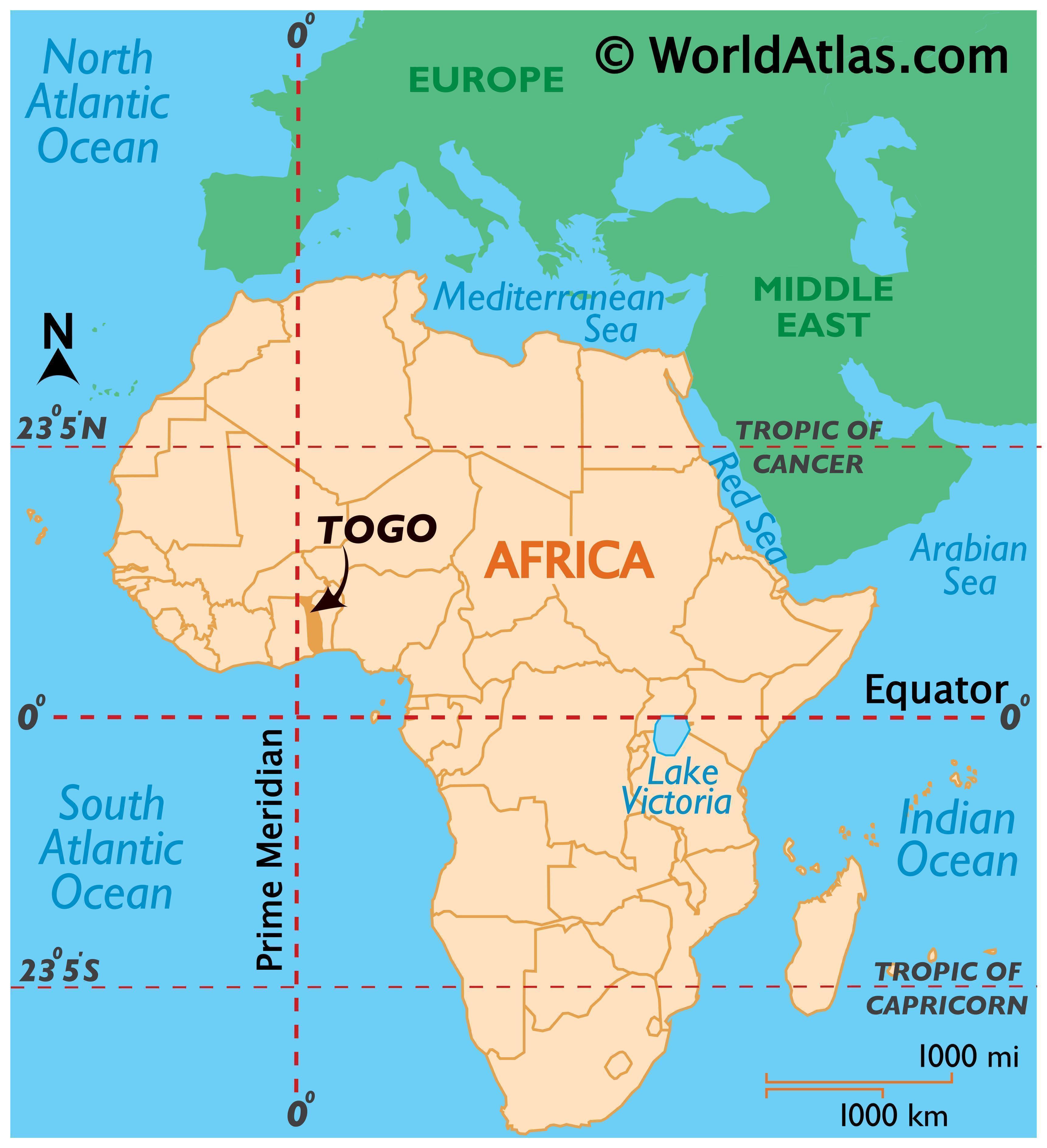
Life up here in Mango isn’t always easy, especially for those who live “off compound” (more about the hospital compound later). They’re a 9 hour drive from the nearest big city (Lome, the capital) where you can get things everyday conveniences we take for granted, like cheese, chocolate, coffee, or good shampoo. I haven’t had any fresh fruit since I arrived here since none is in season and they don’t import any in Mango.
Small everyday things we take for granted are so much more difficult here; imagine learning to cook with minimal available ingredients, having to wait for a shipping container that might come once a year for any new furniture you want, not being able to drink tap water and not having easy access to bottled water, running out of water and electricity regularly (which also means your fan and fridge stop working), and not being able to see family or friends for 3 years at a time. To forgo the comforts of home, often choosing a life of relative poverty by our standards (although by Togolese standards they are wealthy) and material hardship. Forever. Many have come here having only done a brief visit; some have minimal overseas experience. They truly live here, from having their children here in the hospital, to schooling their children on the compound. I’ve spoken to lots of “long-termers” and when I ask them what they love most about their job, the answer is almost universally and unequivocally “the Togolese people”. To me, actions speak louder than words, and these people are really showing love for the people of Togo by forgoing their own creature comforts they’re accustomed to in order to live life in solidarity with the Togolese.
One story in particular stood out to me: there was an American surgeon who helped start the hospital (it’s only a few years old); he lived here with his wife and children. Two years ago, he became very ill with Lassa Fever** (a less dangerous cousin of Ebola; see below for details) and died despite being evacuated to Germany. His wife, instead of picking up and leaving back to the USA, has continued to stay here in Togo with her children and continue her work here. Her parents have moved here to help on the hospital compound so they could better support their daughter. This is dedication. This is love for the Togolese. This has so far been representative of my experience with missionaries.
Despite the fact that missionaries living in the community are living in hardship compared to North American standards, life on “the compound” (which is where I am) is pretty deluxe. By Togolese standards, it’s 5 stars. “The compound” is the large piece of land (63 acres) that houses the hospital. It also has the guesthouse, where “short-termers” (like me) live, and the permanent houses of a few long term missionaries (primarily MDs who have to be on call frequently). We are really spoiled. There is POTABLE WATER coming out of the taps!!!! (This still blows my mind.) They have a generator so we don’t have to suffer through the frequent power outages and resultant surges that fry pretty much any electronic device. There is a beautiful pool that was donated by two competing Texan pool companies who came together to donate the materials and expertise to build the pool. I have 3 (mostly American-style) meals a day prepared for me and the dishes are done by the kitchen staff. In my room I have a ceiling and wall fan, AC (extra cost) and hot water (not that I need it, it’s boiling hot!).
 |
| Typical view of "the compound". It is very dry and dusty here! (And also hot. Very, very hot.) |
 |
| On the right are solar panels that help power the compound when the power goes out. There is also a back-up generator. |
 |
| Here is a view of the hospital. It has an inpatient and outpatient building. The cement blocks were all made locally. |
 |
| My room! (Notice there are no blankets...I rarely even sleep with the sheet over me. Too hot! I keep the curtains closed to avoid scandalizing any passing Togolese while I lounge in my tank top and short-shorts. |
 |
| Luxury bathroom! |
 |
| The pool (and outdoor gym you can see at the far end) |
 |
| The kiddie pool is attached; there are also fountains |
My goal in coming to the Hospital of Hope was primarily to serve a medical need. I decided to sign up with Samaritan’s Purse (a Christian charity which has many overseas partners) because of their good reputation among development workers (well, at least the few that I know and talked to!), plus I am Christian. I am all too aware of the potential ethical pitfalls of short term medical “voluntourism” as it’s often called. So I wanted to go somewhere where I felt that I would be helpful and the system sustainable even though my visit would be short (about 5 weeks). In the end, I just told Samaritan's Purse to just put me where they felt I was needed. So here I am!
Here at the Hospital of Hope, I’ve since learned that the OB/GYN who was here for the last 1.5 years is actually leaving 2 days after I arrive. I have mixed feelings, as I would have been much more comfortable coming as her locum, which is what I’d initially thought. However, when I talked with her about it, she reassured me she has tried to help the locally trained midwives and an expat family MD with an interest in OB (Stephen) to take over after I leave.
Many of the long term missionaries have told me that having the “short-termers” coming over has been a refreshment and encouragement (I am taking over a bunch of the CS call to give the sole local general surgeon a bit of a break). I’ve talked to Stephen, and he’s keen to improve some of his OB skills (he already does C-sections and vacuum deliveries) so hopefully in the short time I’m here, I’ll be able to help mentor him through some things he wants to learn (ex. D+C). I’m going to try to put together a teaching session for the Togolese nurses and midwives on a topic of their choosing. In the meantime, I’m able to provide some more continuity to patients for at least another month (for whatever that’s worth.) And I’m glad in a way that the other OB isn’t here, as surprisingly there seems to be enough work for only one.
**A few words on Lassa: I didn’t think I was going to be here in Lassa season (which normally runs from Feb-April) but apparently there’s already been a confirmed case an hour south of here and suspected case has been admitted to the hospital. Lassa has been known to be around in West Africa for years, but only recently discovered in Togo (ironically, the first case here was the surgeon who passed away 2 years ago). Chances of death are pretty low, at only 1%, however risk of deafness is about 1:3 (yikes!!). Thankfully it is less contagious than Ebola and not spread by casual contact.
 |
| The "Lassa Tree", where patients with fever are being evaluated by a physician to assess their risk of having Lassa Fever. If they meet criteria, they are admitted to a special ward and confirmatory testing is sent to Lome. |
I’m impressed with the hospital’s response to Lassa: they have developed their own Lassa risk factor algorithm and screening tool and have a very systematic way of dealing with and minimizing the risk. Once Lassa season starts, every patient wishing to be seen at the hospital has their temperature taken at the gate before they enter the compound, and if they’re febrile, they’re put under the “Lassa Tree” to be further evaluated by a physician. If they are suspected to have Lassa, they are admitted and isolated in a special “Lassa Ward” so as to minimize exposure to other patients and staff, even though Lassa isn’t terribly contagious. There is currently one patient in the Lassa ward, but confirmatory tests are pending.